 2022 Trekking
Adventures
2022 Trekking
Adventures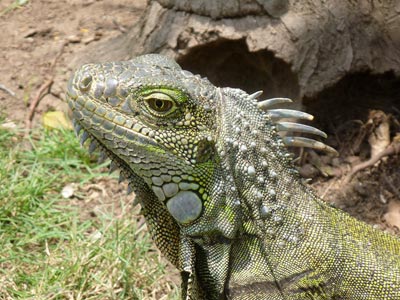
Day 1 Friday — April 7, 2017: Arrival in Guayaquil
We arrive at Guayaquil airport in Ecuador, where you will be met by an Andes Adventures representative who will assist you with your luggage and your transfer to the hotel.
Overnight: Wyndham Guayaquil Hotel
Meals: On your own on arrival day. Program starts on Day 2.
Day 2 Saturday — April 8, 2017: Guayaquil – San Cristobal Island – El Junco Lake
After breakfast we return to the airport for our non-stop one and half hours flight to San Cristobal Island. Upon arrival we pass through an inspection where park officials ensure that no foreign plants or animals are introduced to the islands and this is where you need to pay the Galápagos National Park entrance fee of $100.
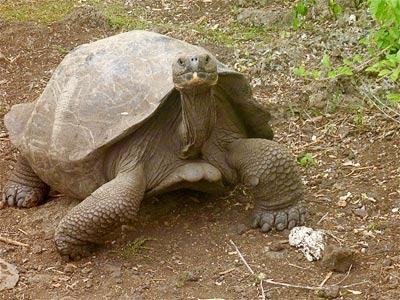
After lunch we drive to El Junco Lake in the highlands of San Cristobal; this crater has been filled with rain water for millions of years and is part of the only permanent fresh water source in the archipelago. We enjoy astonishing views of the Island and hike around the lake across fields of miconia plants, ferns and small bushes that constitute this highland environment. We drive to the Galapaguera de Cerro Colorado where we will see the island's giant tortoises. We continue down to our hotel.
Overnight: Hotel Blue Marlin or Hotel Katarma - San Cristobal
Meals: B, L, D.
Today's hike: About 2 miles (3 Km).
Day 3 Sunday — April 9, 2017: Snorkel Leon Dormido (Kicker Rock)– Tijeretas Hill to Loberia
This morning we board a fully equipped, large comfortable boat for the one-hour ride to Leon Dormido (sleeping lion), so named because of its shape, but more commonly known as Kicker Rock. The remains of a lava cone eroded by the sea have formed two vertical rocks rising 500 feet from the ocean, which in turn form a small channel that is perfect for snorkeling. The colorful display of tropical fish contrasts against a backdrop of black volcanic rock. Razor surgeonfish, Cortez rainbow wrasse, and orange-bellied triggerfish are just a few you may see, as well as a gentle sea Turtle floating by. A fresh lunch is served on deck.
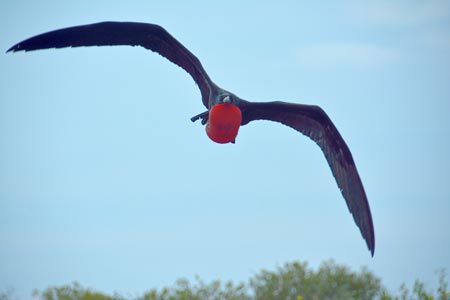
This afternoon we enjoy a hike to Cerro Tijeretas through a path that take us to the place where Darwin disembarked from the HMS Beagle and set foot on the Galápagos for the first time in 1835. Along the path, Darwin’s findings and theories (from his short five-week stay on the islands) are shared as well as the history and significance of the Galápagos. We ascend to the top of Cerro de las Tijeretas (Frigate Bird Hill) where breathtaking sea views unfold, also a perfect vantage point to marvel at the antics of frigate birds, known as the "pirates of the sea," owing to their habit of stealing food from unassuming boobies. We continue hiking on the trail to Carola Beach and then across town to La Loberia Beach, from where we will hike back to our hotel.
Overnight: Hotel Blue Marlin or Hotel Katarma - San Cristobal
Meals: B, L, D.
Today's hike: About 6 miles (10 km).
Activity: Snorkeling
Day 4 Monday — April 10, 2017: Floreana Island - Isabela Island
The Island of Floreana rests south-west of Santa Cristobal (approximately 2.5 hour boat ride, depending on sea conditions).
We arrive at Puerto Velasco Ibarra on the west side of the Island. Floreana was one of the first Islands to become inhabited on a permanent basis, and was considered a key resupply point by whaling ships and other boats due to its supposedly inexhaustible supply of tortoises.
Upon arrival in Floreana we will take a 30-minute drive up to the highlands through the agricultural fields and a stunning landscape dominated by forests of the endemic miconia trees, and palo santo.
We drive around Cerro Pajas (640 m), the largest volcanic hill in Floreana until we reach el Asilo de la Paz -- where the most interesting human history of Galapagos took place. Your guide will describe the adventure, romance and mystery of the area as you walk the trails, encounter Galapagos giant tortoises, and visit beautiful springs and incredible lava formations. The hike takes approximately one hour.
After lunch we continue by boat to Isabela Island (approximately 1.5 hours) and arrive in the quaint town of Puerto Villamil. Isabela the least-visited and the archipelago's largest island, is formed by the joining of five young volcanoes.
Overnight: La Casa de Marita – Isabela
Meals: B, L, D.
Boat: 2.5 hour boat ride from Cristobal to Floreana & 1.5 hours from Floreana to Isabela. Times can vary depending on water conditions.
Today's hike: One hour hike.
Day 5 Tuesday — April 11, 2017: Tintoreras – Tortoise Breeding Center – Wetlands
Our panga (small boat) awaits us to take us on a journey to the tiny island of Tintoreras, a unique volcanic formation and our hiking – snorkeling destination for the day.
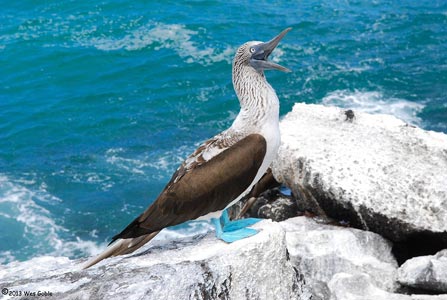
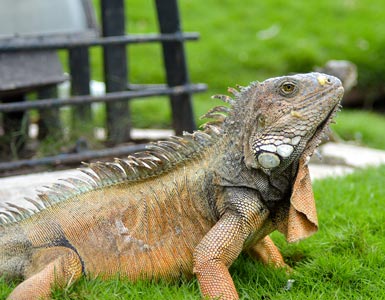
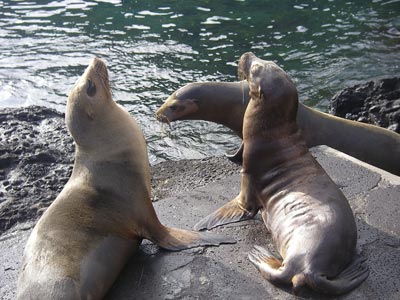
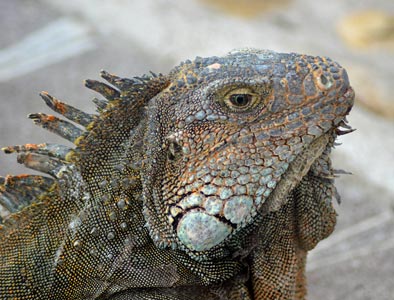
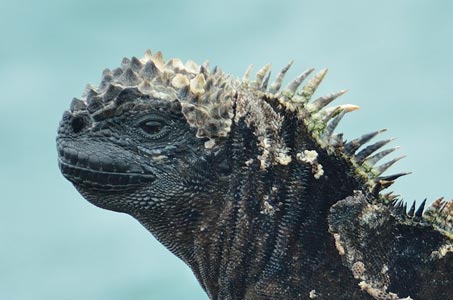
The western side of the island is home to a primitive species of lichen which flourishes in the moisture carried by the prevailing winds. It is inhabited by young marine iguanas, the world's only sea-going lizard, small colonies of sea lions. White-tipped reef sharks can occasionally be spotted taking a well-earned rest among the nooks and crannies of the volcanic formation comprising this beautiful island. Boobies put on quite a show in the quiet lagoon and, we may even catch a glimpse of the Galápagos penguin.
We will have a relaxed day and visit the Tortoise Breeding Center, where the National Park has been making an immense effort to protect tortoises in their first years of life from the threats of introduced species. We will be able to see the different shells from each race (sub-species) and learn more about the natural history and importance of the Galápagos giant tortoise.
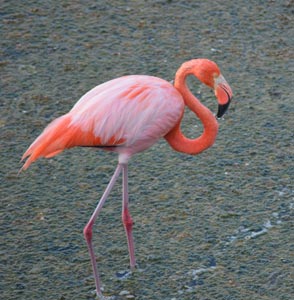
A boardwalk leads us over the marshlands or humedales—brackish lagoons that provide a habitat for four mangrove species and numerous other migratory birds flamingos, darwin finches, yellow warblers, galapagos flycatchers, stilts, pintail ducks, common gallinule and other shore birds that come to feed in the lagoons. Marine iguanas are seen in the lava rocks and sand banks that form these swamps.
The wooden walkways lead to a tortoise breeding center with interesting interpretive displays. The center has been responsible for the breeding and release to the wild of over 2,000 giant tortoises in the past few years alone. There are different distinct varieties from each of the volcanoes in the island. The difference can be seen in their shells.
Volcanoes on Isabela Island include Sierra Negra Volcano (3,688'), Alcedo Volcano (3,707'), Wolf Volcano (5,600'), Cerro Azul Volcano (5,541'), Darwin Volcano (4,350') and Ecuador Volcano (2,590')
From the center, a walk along the beach takes you through town and back to the hotel, where you can take a swim or stop in town to get a taste of local life.
Isabela is a great snorkeling site where sea turtles, shark and rays are seen.
Overnight: La Casa de Marita – Isabela
Meals: B, L, D.
Today's hike: We will hike about 2 hours on easy, gravel, and wooden trails, flat terrain.
Activity: Snorkeling.
Day 6 Wednesday — April 12, 2017: Sierra Negra Volcano – Campo Duro
After a one-hour drive from Puerto Villamil to Isabela’s Highlands, you gain an entirely new perspective on the Galápagos experience. At the starting point of today’s hike you immediately notice the difference in vegetation and weather—fostered by the southeast trade winds that bring significant humidity to the southern side of the island. The lowland landscape of prickly pear and the endemic candelabra cactus that dominate the coastal areas give way to more lush and diverse flora including bromeliads and epiphytes.
Your path leads to the rim of the Sierra Negra Volcano. The Sierra Negra Volcano stands at 3,688 feet and last erupted in 2005, depositing a new and dramatic layer of lava. This volcano’s caldera is the world’s second largest, with a diameter measuring approximately 6.5 miles.
As you circle the caldera, you spot a variety of birds including finches and flycatchers as well as the Galápagos hawk. Lava lizards scuttle underfoot. From the caldera’s rim you continue to Chico Volcano to see fumaroles (gas and steam vents in the earth’s crust) and unusual lava formations, a striking visual record of the islands’ geological history. We enjoy spectacular views of volcanoes and nearby islands.
Overnight: La Casa de Marita – Isabela
Meals: B, L, D.
Today's hike: We will hike about 11 miles.
Day 7 Thursday — April 13, 2017: Boat Ride from Isabela to Santa Cruz – Hike to Tortuga Bay
From Isabela we board a speed boat for a 2-hour boat ride (duration depends on water conditions) to Santa Cruz Island.
Upon arrival we check into the hotel, drop the luggage and have lunch.
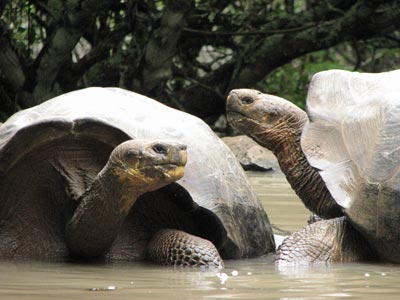
In the afternoon, we will take a 40-minute journey from Puerto Ayora to private farms that conserve pristine, native, and endemic vegetation for the habitat of these magnificent creatures. As we follow the trail winding through this landscape, you’ll get plenty of chances to marvel at the Galapagos Tortoise in its entire splendor. These majestic giant tortoises of Santa Cruz—part of a family best known for their dome-shaped shell and gigantic form—are often found partly submerged in mud ponds to combat skin parasites or to regulate their body temperature on warm and sunny days. After becoming acquainted with your new hard-backed friends, continue to explore the volcanic origins of the island by journeying through the intriguing Lava Tunnel.
Overnight: Santa Cruz
Meals: B, L. (Dinner on your own.)
Boat: 2 hour boat from Isabela to Santa Cruz (can be to 2.5 hours depending on water conditions)
Today's hike: About 4 miles.
Day 8 Friday — April 14, 2017: Santa Cruz to Guayaquil
In the morning we will take a 40 minute bus to Itabaca Canal that divides Santa Cruz Island and Baltra Island. A short ferry ride will bring us to Baltra where a bus will take us on a 10-minute ride to the airport in time to catch our flight to Guayaquil. Upon arrival we will be transferred to the hotel. Later in the evening we will have our farewell dinner.
Overnight: Wyndham Guayaquil Hotel
Meals: B, L, D.
Day 9 Saturday — April 15, 2017: Guayaquil/Flight home
Transfer to the airport and depart on homeward-bound flights.
TRIP FEE INCLUDES: • All airport transfers as scheduled on itinerary. • Bilingual professional guides. • Naturalist guides in Galapagos. • All accommodations are based on double occupancy • Ground transportation. • All meals except one dinner on Santa Cruz Island. • Sightseeing tours as described in itinerary. • Tips to porters. • $20 “Transit Control Card” INGALA fee. NOT INCLUDED: • Round trip international flight to Guayaquil. • Galapagos tickets (Guayaquil-San Cristobal/Baltra-Guayaquil) $450. • Galapagos National Park entrance fee $100 (subject to change). • Tips for tour leader, guides and staff. • Travel insurance (highly recommended) for which an application will be included with your confirmation, Cost of hospitalization and evacuation if necessary, passport fees, excess baggage fees. All items of personal nature such as: telephone calls, alcoholic beverages, etc. Airfare is not included in the land cost of our trips. Suggested flight routings and airlines will be provided. Important: Please check with our staff before purchasing tickets. We need to verify your flight schedule and confirm that we have enough participants to guarantee the departure. Note: All itineraries are subject to change due to circumstances beyond our control including, weather, road or trail conditions and flight schedules.
|



Phone: Send us an e-mail with your phone # if you need us to call you.
Request Info or E-mail 
Andes
Adventures on Facebook